
 By
By Netflix, the world’s leading streaming giant, is diving deeper into the world of artificial intelligence—this time, not just for recommendations or search results, but for actual filmmaking. Yes, you heard that right. The same technology that helps you pick your next binge-watch is now helping bring movie scenes to life.
At a recent earnings call, Netflix co-CEO Ted Sarandos revealed that the platform has already used Generative AI (GenAI) in its productions. The result? Faster production, lower costs, and stunning visuals—all without compromising creative vision.
But what does this mean for the future of movies and series? Let’s break it down.
A Historic First: AI Footage Hits the Screen
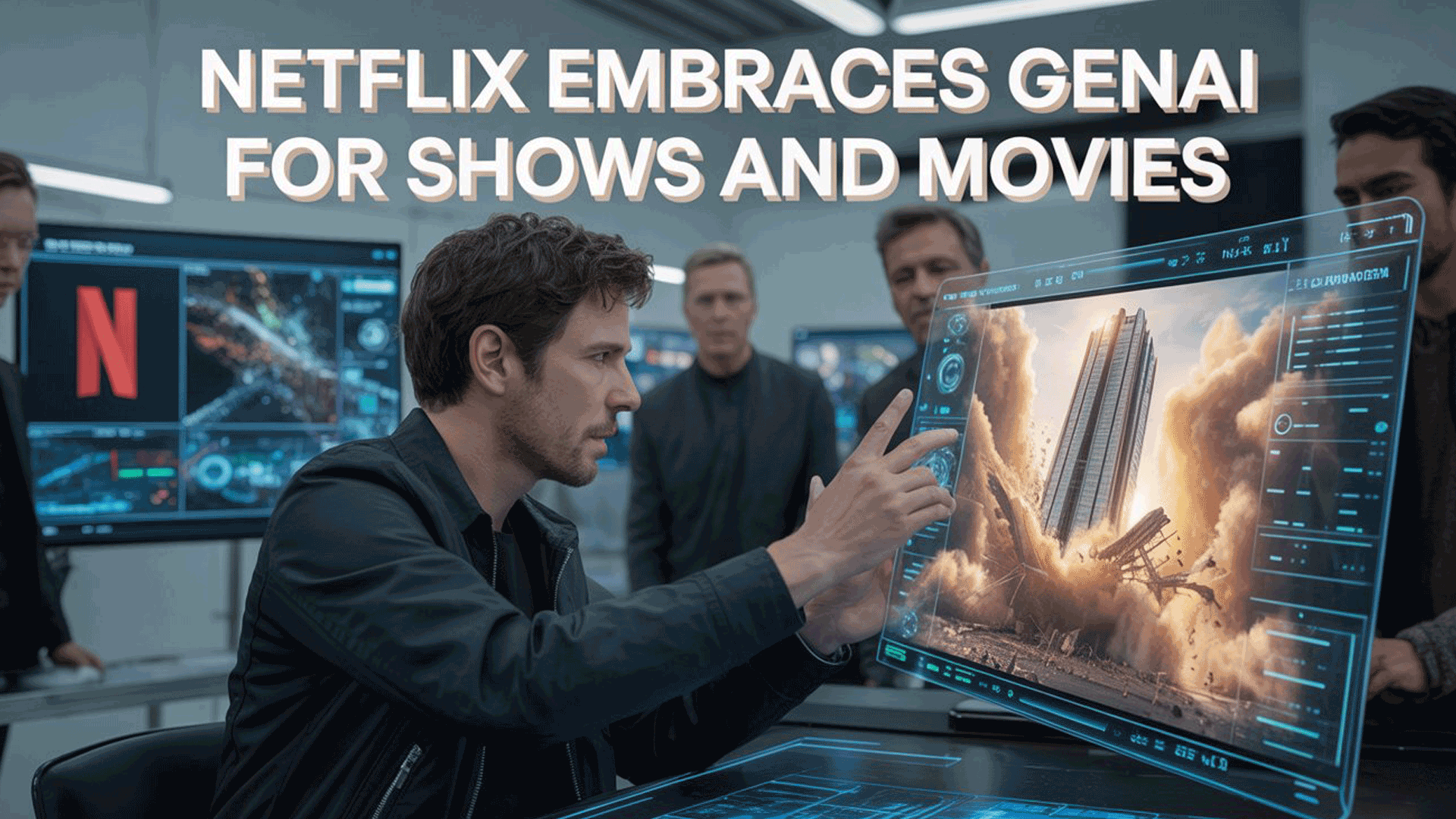
Netflix made headlines by introducing what it claims to be “the very first GenAI final footage to appear on screen”. This wasn’t a futuristic sci-fi film—it was an Argentine series called El Eternauta (The Eternaut), where AI helped create a dramatic scene involving a collapsing building.
Traditionally, this type of visual effect would require weeks of work, massive budgets, and specialized equipment. But thanks to GenAI, the process was reportedly 10 times faster and more cost-effective. That’s not just impressive—it’s revolutionary.
AI Is a Tool, Not a Threat
There’s always a fear that AI will replace human creativity. Netflix, however, sees things differently.
Sarandos emphasized that AI isn’t about replacing people—it’s about helping them do their jobs better. “This is real people doing real work with better tools,” he said. It’s a refreshing perspective in a world where automation often sparks panic.
In this case, AI is helping creators with:
- Pre-visualization (sketching out a scene before it’s shot)
- Shot planning
- Advanced visual effects, like de-aging or dynamic environments
In short, GenAI is becoming the digital assistant filmmakers never knew they needed.
Behind the Scenes: More Than Just Visual Effects
Netflix isn’t stopping at visual effects. Co-CEO Greg Peters shared that the company is using AI in other critical areas:
1. Personalized Content Discovery
AI helps Netflix refine its algorithms so that viewers find content they love faster. It can suggest shows based on moods, genres, and even how you responded to previous recommendations.
2. Smarter Search
AI-powered search ensures that when you type something vague like “romantic show with Paris,” you actually find what you’re looking for. It’s all about reducing frustration and increasing satisfaction.
3. Ad Innovation
Netflix plans to roll out interactive AI-generated ads by the second half of 2025. These ads could potentially adapt based on user behavior—making them more relevant (and less annoying).
Why This Matters: Big Impacts in the Entertainment Industry
Netflix embracing GenAI is not just about staying trendy—it’s a strategic move with industry-wide implications.
Faster Production Timelines
AI drastically cuts down the time needed for editing, effects, and even planning scenes—meaning content reaches audiences sooner.
Cost Reduction
High-end effects don’t need high-end budgets anymore. This levels the playing field for creators around the globe.
More Creative Freedom
With AI handling the technical grunt work, directors and writers can focus more on storytelling and less on logistics.
Real People, Real Results
Netflix was quick to point out that GenAI isn’t about letting machines create movies on their own. The tech is simply there to enhance the human touch, not replace it.
Think of it like giving an artist a better brush, or a musician a higher-quality instrument. The creativity still comes from the person—AI just makes the process smoother, faster, and sometimes more imaginative.
What’s Next? A Glimpse into the Future
While Netflix didn’t share exact details about upcoming GenAI tools, they’ve made it clear that this is only the beginning.
Future applications could include:
- AI-assisted scriptwriting or dialogue polishing
- More immersive virtual sets
- AI-generated background extras or crowd scenes
It’s safe to say the line between real and artificial will keep blurring—but as long as it serves the story, viewers probably won’t mind.
Netflix by the Numbers: A Strong Quarter
In case you’re wondering how this all plays into Netflix’s business performance—things are looking up.
- Q2 Revenue: $11.08 billion (up 16% from last year)
- Profit: $3.13 billion
- Viewing Stats: Over 95 billion hours of content watched in the first half of 2025
- Global Appeal: One-third of all views came from non-English titles
These numbers not only reflect Netflix’s global reach but also its growing investment in innovation and storytelling diversity.
Conclusion: AI Isn’t the End—It’s the Next Chapter
Netflix’s foray into GenAI is an exciting development—not just for the company, but for the entire entertainment industry. By combining technology with creativity, Netflix is making content creation faster, more affordable, and in many cases, more imaginative.
Rather than fear the rise of AI, Netflix is showing us how it can be a powerful ally for storytellers everywhere. Whether it’s building crumbling towers or suggesting the perfect show for your Friday night, AI is now part of the showbiz backstage.
And if this is just the beginning, the next season of entertainment is going to be wild.
FAQs
Q1: What is GenAI in the context of Netflix?
GenAI (Generative AI) refers to tools that can create images, video effects, or even text. Netflix uses GenAI to assist with things like visual effects and pre-production planning.
Q2: Which Netflix show first used GenAI on-screen?
Netflix used GenAI in the Argentine series El Eternauta, specifically to generate a scene of a building collapsing.
Q3: Will AI replace filmmakers?
No. Netflix emphasizes that AI is a tool to support, not replace, real human creators.
Q4: Is Netflix using AI for ads too?
Yes. The company plans to launch interactive, AI-powered ads later in 2025.
Q5: Can viewers tell if a scene was made with AI?
In most cases, no. The goal is to make AI-assisted scenes look just as realistic and seamless as traditionally created ones.